How everyday conversations can strengthen instruction and improve student achievement.
Trust me, I get it.
I see the demands on your time, the interruptions, the competing priorities, and the 47 things that somehow need your attention before 9:00 a.m. I spent 19 years as a school principal, and these days, I work alongside principals and district leaders in schools from coast to coast. I’m right there in the trenches with you.
And don’t tell my old boss, but goodness, have I learned a lot since leaving my last principalship to travel full-time and learn alongside educators across the country.
I’m anything but a gatekeeper. I want to share what I wish someone had shared with me. In a simple, easy-to-implement, “please don’t ask me to completely change everything I do all day” kind of way.
Some things really are as simple as they seem, and this is one of them.
I’ve become more convinced than ever that some of our most powerful leadership moves happen during ordinary conversations. And the magic isn’t just in asking a great question once. It’s in asking the right questions consistently.
The questions we ask shape what teachers pay attention to, what teams prioritize, and ultimately, what students experience in classrooms. When we ask these questions regularly, they start shaping our shared expectations, our decisions, and eventually, they become “the way we do things around here.”
Here are five questions I believe every school leader should have in their back pocket.
1. What does the standard actually expect students to know and do?
Clarity changes everything. The old saying is true: We cannot hit a target we cannot see.
When we understand exactly what students are expected to learn, we can align instruction, assessments, and expectations to the appropriate level of rigor.
When we unpack standards collaboratively, we develop a shared understanding of what the standard actually says (and what it doesn’t say). You might be surprised how differently teachers interpret the very same standard. That’s what makes these conversations so valuable.
2. What does proficiency look like, and do we have shared expectations?
Here’s something I’ve learned from sitting in countless PLC meetings: Just because we’re teaching the same standard doesn’t mean we have the same expectations for student work.
Students deserve consistent expectations for high-quality work, regardless of whose classroom they’re in.
Looking at student exemplars, using common rubrics, and calibrating expectations together can be game changers. And imagine how much more confident students feel when they understand exactly what success looks like.
3. How are students behaviorally, cognitively, and emotionally engaged in their learning?
This is about so much more than students being on task.
We want students who are doing the work, doing the thinking, and WANTING to learn.
Behavioral engagement means students are actively participating. Cognitive engagement means they’re thinking deeply, tackling challenges, making connections, and taking ownership of their learning. Emotional engagement means they’re curious, connected, excited, and invested in what they’re learning.
A classroom full of quiet, compliant students might look wonderful during a walkthrough. But I want to know what students are experiencing. Are they curious? Are they thinking? Do they feel like their learning belongs to them?
And that’s what we should be looking for when we visit classrooms.
4. What evidence tells us students are learning?
I love a creative lesson. I love seeing teachers pour their hearts into planning meaningful learning experiences.
And I especially love seeing evidence that students are learning.
Student work, quick checks for understanding, common formative assessments, and conversations with students give us valuable information about what’s working and where students need additional support.
The best part? We don’t have to wait until the end of a unit to find out. We can use evidence along the way to celebrate growth and make adjustments while there’s still time to make a difference.
5. What will we do differently based on what we’ve learned?
This is where everything we’ve learned comes together, and where we have the greatest opportunity to improve student learning. We’ve unpacked the standard. We’ve clarified proficiency. We’ve considered engagement. We’ve examined student evidence.
Now comes the really important part. What are we going to DO with what we’ve learned? This question turns talk into action.
We identify which students need what support, choose a specific instructional strategy to try, and decide what evidence we’ll bring back to determine whether it worked. Then we learn from the results and keep getting better together.
Put These Questions to Work
The best part about these five questions is that you can put them to work tomorrow, without changing a thing about your schedule.
During a teacher team meeting. While visiting a classroom. In a coaching conversation. Even during one of those unexpected hallway conversations that somehow turn into the most meaningful part of your day.
Quick tip? Please don’t ask all five questions at once. Your teachers might start avoiding you in the hallway. Just start asking them consistently, with genuine curiosity and a shared commitment to helping students thrive.
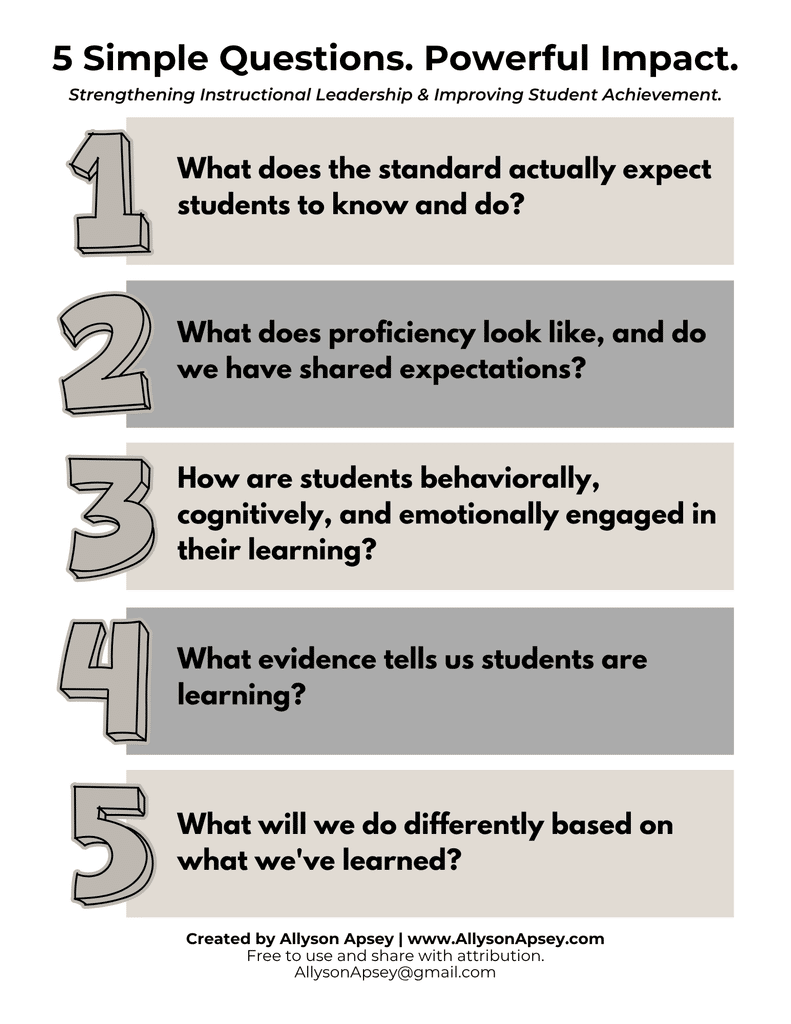
I’ve created a simple, printable graphic with all five questions. Grab your free copy here and put it on your clipboard, next to your computer, or somewhere you’ll see it throughout the day. Let it remind you to keep the most important things at the center of your leadership conversations.
What we consistently ask about becomes what we consistently focus on. When we consistently focus on teaching and learning, we can change what students experience every single day.
You have more opportunities to influence student learning in a single day than you might realize. Let these five questions help you turn those everyday conversations into meaningful improvements in teaching and learning.
Click HERE for a printable PDF version of this article to use with your team.